FinTech · AI engineering
Project Wolf: AI futures trading that respects risk, fees, and bad signals
An AI-signal futures platform for Binance. K-Means clustering ranks the trades, a state-aware engine executes them, and risk controls keep the account alive.
Trading console
Binance · liveOpen positions
AllocateETHUSDT 10x
entry 3,412.50
BTCUSDT 5x
entry 97,140.00
ETHUSDT 20x
entry 3,388.10
BTCUSDT 3x
entry 96,802.00
ETHUSDT 8x
entry 3,455.00
BTCUSDT 12x
entry 97,420.00
ETHUSDT 4x
entry 3,361.75
Backtest equity, 90 days
funding fees and liquidations includedRanked signals
K-MeansETHUSDT · Buy · gain 5% · stop 2%
BTCUSDT · Short · gain 3% · stop 1%
ETHUSDT · Buy · gain 2% · stop 1%
Backtest includes
funding fees, 8-hourly
liquidation prices
worst-case loss check
Account
Cooling lockouts
The story behind
A market order that fills is the easy case. The engine had to hold the other eight: queued, new, partially filled, canceled, pending cancel, rejected, expired, and the liquidation order nobody wants. Each state arrives over a WebSocket stream that can drop, duplicate, or lag behind the REST view of the same account, so the platform reconciles both feeds into one truth before it acts. A 125x multiplier makes every mistake 125 times bigger, which is why allocation validates the worst-case loss against the account before an order ever leaves the building.
The signals come from K-Means clustering over historical candles, and the honest part is the backtester: it simulates funding fees and liquidation prices, because a backtest that skips them flatters every strategy it touches. Distributions that survive that test get ranked and allocated. The ones that fail get a cooling lockout, so a bad signal cannot keep re-entering the same losing trade while the account bleeds.
Business value
- The client demos a working engine, not a deck about one.
- Risk controls are structural: loss validation, position cooling, and three allocation strategies, not a trader promising to be careful.
- One codebase covers signal research, backtesting, and live execution.
Project scope
- Binance USD-M Futures integration over REST and two WebSocket streams.
- K-Means signal clustering and a distribution ranking pipeline.
- A backtesting engine that simulates funding fees and liquidation prices.
- Risk allocation with three strategies and position-cooling lockouts.
- Cloud orchestration on AWS Lambda, EventBridge, and Step Functions.
Deliverables
- A 29-project .NET 8 solution, around 29,000 lines across 521 files.
- Binance Futures engine with eight order types and nine order states.
- ML signal pipeline with Microsoft.ML K-Means clustering.
- Backtester with funding-fee and liquidation simulation.
- Five integration-test suites over the data and trading layers.
Tech stack
Frequently asked
Why is this case study named when others are anonymized?
Project Wolf is a public engagement: the founder's five-star review of the work is on our Upwork profile under his own name. Our healthcare client stays anonymized because compliance demands it. Where we can show the name, we do.
Can you build a trading system for a different exchange or asset?
Yes. The hard parts transfer: order state machines, reconciling a WebSocket stream against a REST snapshot, worst-case loss validation, and backtests that include the costs most backtests skip. The exchange API is the thin layer on top.
How do you keep an automated trader from blowing up an account?
Structurally, not behaviorally. Every allocation validates its worst-case loss against the balance first, the position multiplier is capped, a failed distribution gets a cooling lockout before it can re-enter, and stop-loss and liquidation prices are modeled before the trade, not discovered after.
Have a workflow that needs this?
Tell us the shape of the problem. Scoped estimate, usually within 1-2 business days. No card, no obligation.
Estimate this buildor email business@highcraft.ioMore work
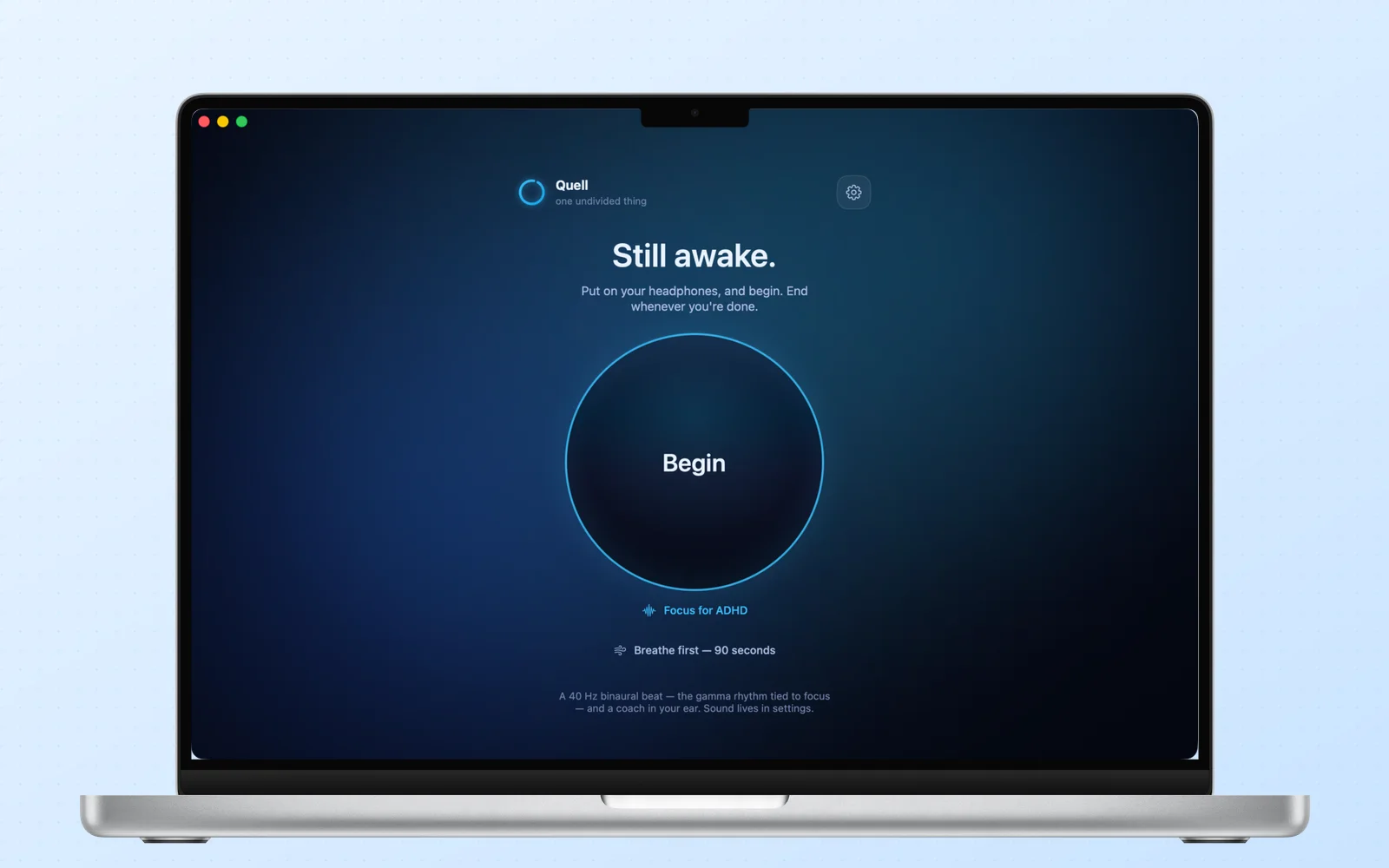
Quell focus app
A focus app that generates a 40 Hz binaural beat, a neural-voice coach, and AI music on the device. No accounts, no server, works offline.
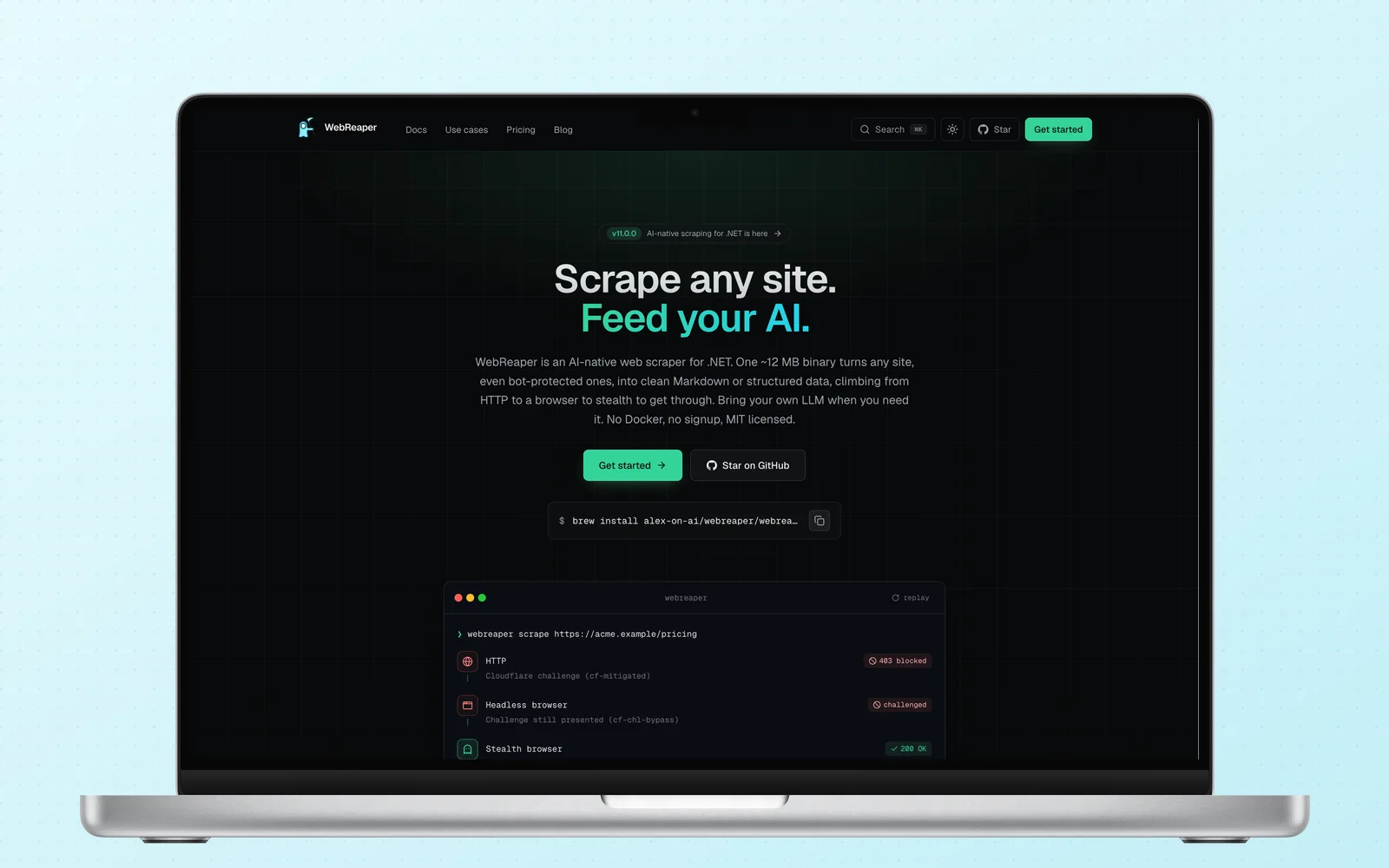
WebReaper
One small binary turns any site, bot-checks included, into clean Markdown or structured data for your LLM. MIT licensed, bring your own model.
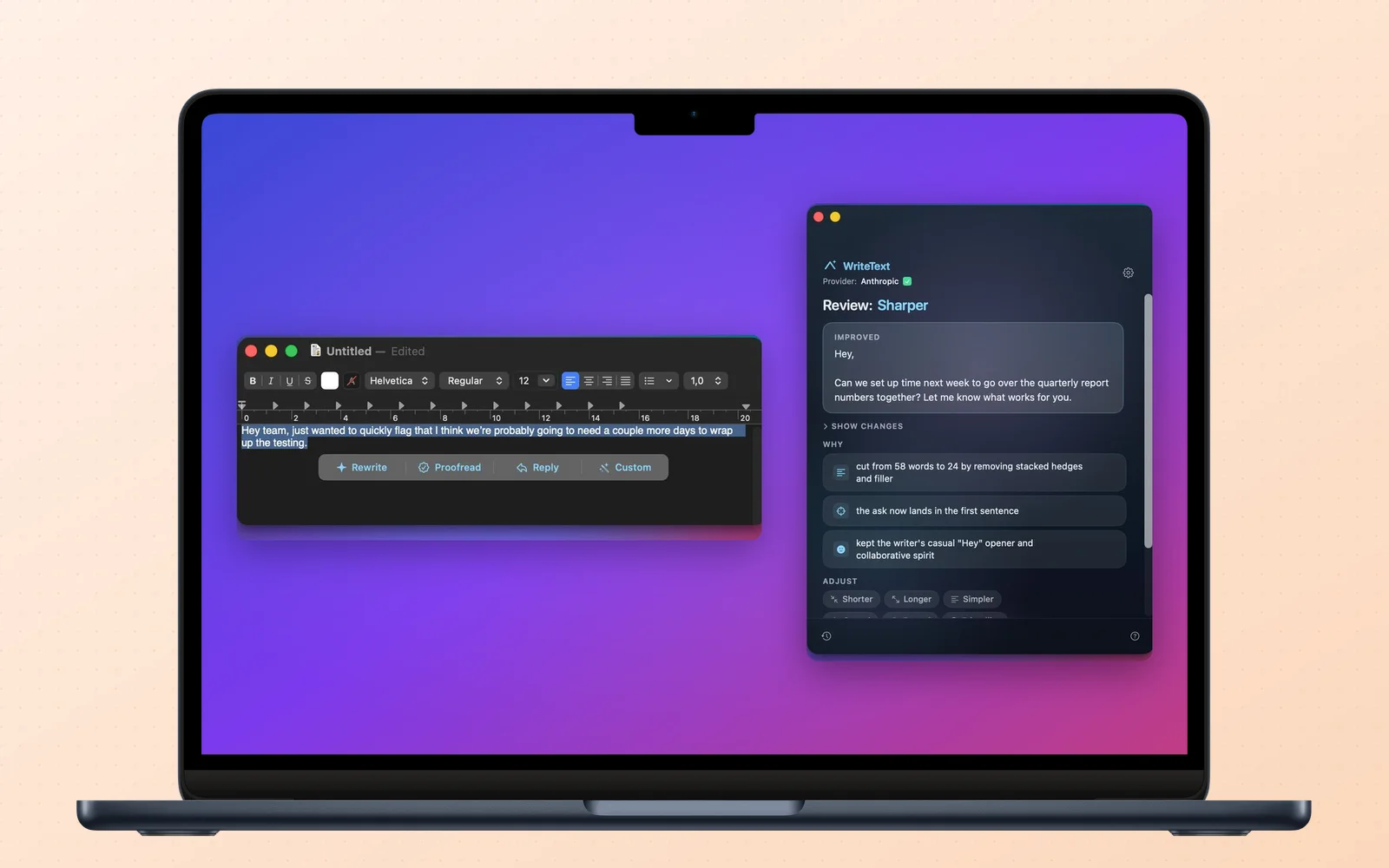
WriteText
WriteText is a menu-bar Mac app that rewrites a selection where it already sits, in Mail, Slack, or anything else, through the LLM provider you bring.