Search "AI automation agency" and you get two kinds of result: agencies promising to ten-times your business, and forum threads asking if those agencies are a scam. (Both can be right. That is the problem.)
An AI automation agency is a team that designs, builds, and runs software to take repetitive, rules-based work off your staff. It uses deterministic automation where the steps are fixed, and AI only where the work is too messy for rules, like reading a document or drafting a reply. That is the whole job. The skill is knowing which half is which.
One disclosure before we go further. I run one of these. So I am not a neutral party, and you should read what follows with that in mind. I will still tell you when not to hire an agency at all, because that is the advice that ages well, and because the fastest way to lose a client is to sell them a robot they did not need.
This is the guide I wish those search results had handed you: what an agency actually does, how the AI part differs from plain automation, the services and the real costs, how to choose one, how to spot a fake, and when to skip the whole idea.

What an AI automation agency actually does
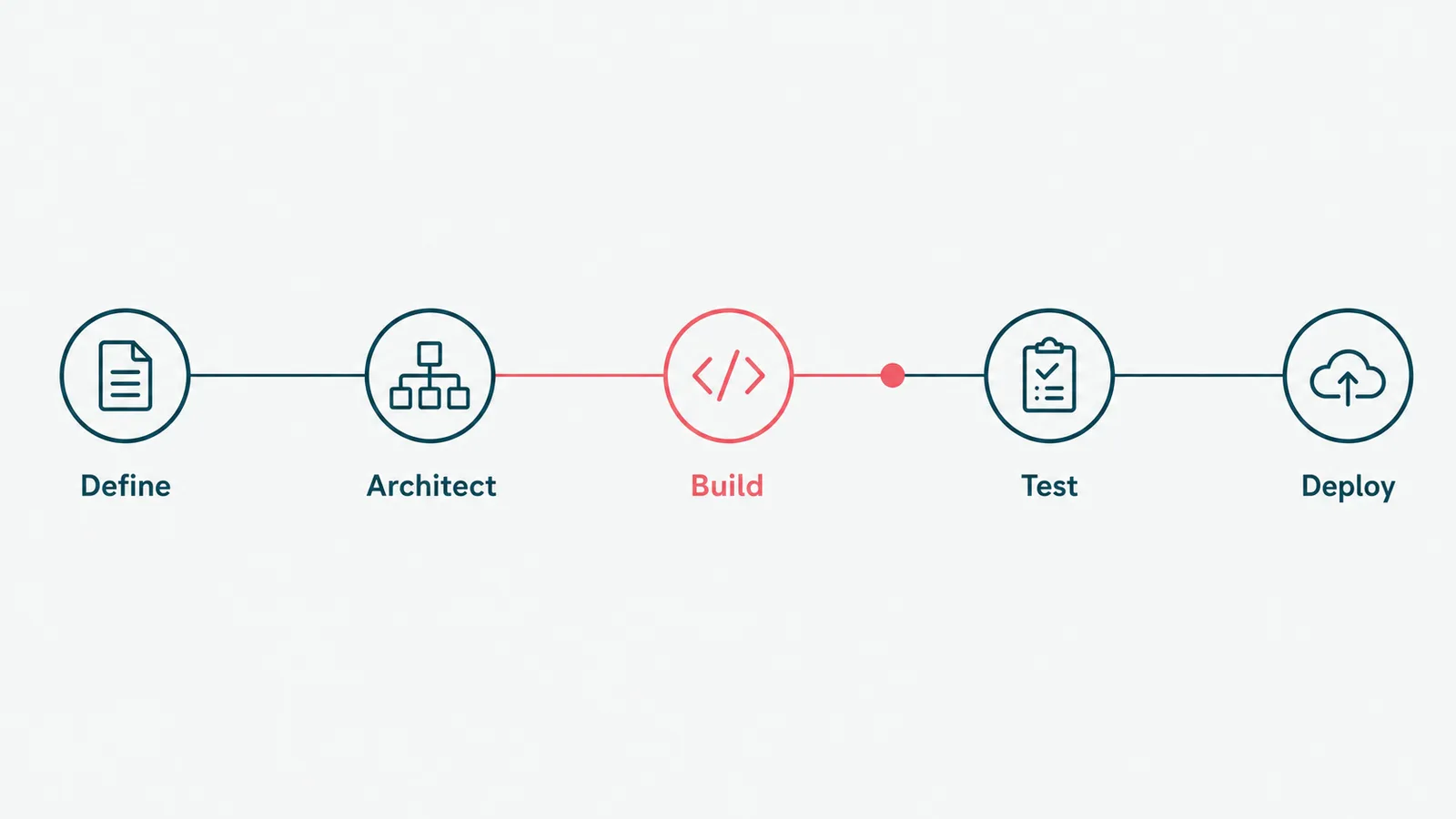
Strip away the ten-times-your-revenue talk and the work is concrete. A good agency maps where your team's hours actually go, finds the highest-volume task with the lowest judgment, and builds software that does it without a human babysitting each step. Then it wires that software into the tools you already run, and sticks around to keep it working.
The payoff is not magic. It is your staff getting their attention back. Fewer hours keying the same data into three systems. Fewer errors from the copy-paste shuffle. Work that used to wait for a free pair of hands now happens overnight without complaint. Done right, an AI automation agency removes the busywork and leaves the judgment, which is the part you hired humans for in the first place.
Who buys this? Usually an operator whose real work has outgrown its tools. A clinic drowning in intake forms. A SaaS team doing manual onboarding for every customer. An expert-led business where the expert spends half the week on admin instead of the thing clients pay for. If that sounds familiar, the rest of this guide is for you. We build this kind of thing for a living, mostly the complex-workflow end of it, so consider yourself warned that I have opinions.
Notice what is not in the job description: replacing your people. Automation takes the typing, not the thinking. Any agency that pitches you a robot to make the decisions is solving the wrong problem, and probably has not met your edge cases yet.

AI agents vs traditional automation: the difference that matters
Here is where the buzzwords either earn their keep or expose themselves, so it helps to know the three levels you are actually buying.
The first is plain automation. Fixed rules, run the same way every time. Robotic process automation is the classic version: a bot clicks the buttons a human used to click. No model, no surprises, fully auditable. Most of what gets sold as AI is really this, and that is completely fine. Boring is a feature when it touches your billing.
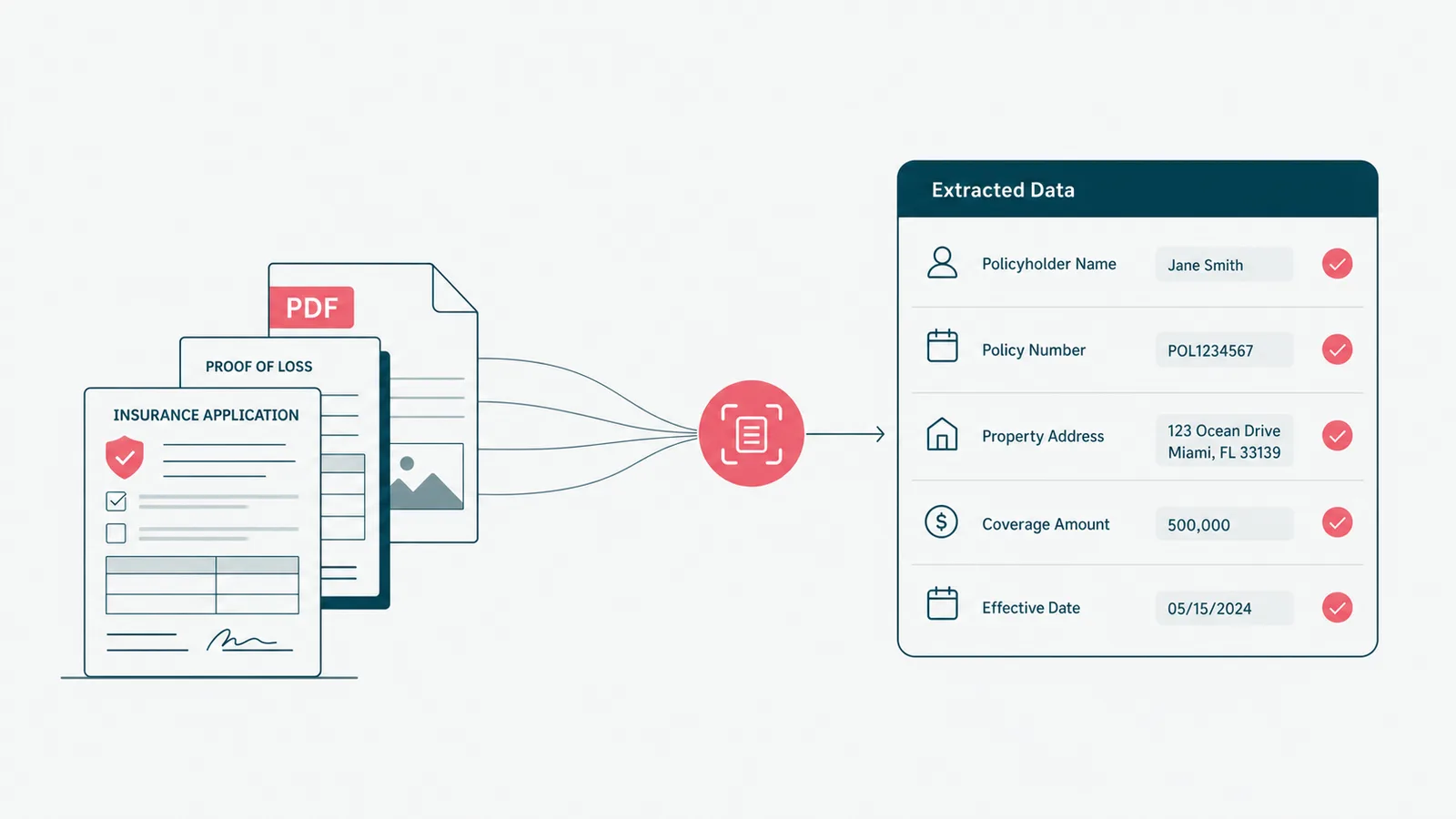
The second is AI-powered automation. A model handles one messy step that rules cannot, then hands back to deterministic logic. Reading a PDF nobody volunteers to read. Pulling structure out of a free-text email. Sorting a support ticket to the right queue. Under the hood this is machine learning and natural language processing doing the part that does not fit an if-statement.
The third is agentic AI. Here the software makes choices about what to do next based on the input, which is powerful and is exactly why it needs a leash. An agent can read a half-finished request and infer what you meant. It can also infer total nonsense with the confidence of a man who has never once been wrong. The honest difference between agentic AI and traditional automation is one word: judgment. Frameworks like the NIST AI Risk Management Framework exist because "the model decided" is not a sentence you want to say to a regulator.
A real agency uses all three, and tells you which one each task needs. Rules where the steps are fixed. AI where the input is messy. A human on anything that carries real risk. If someone wants to point an autonomous agent at your bank account on day one, that is not ambition. That is a future incident report.

What services AI automation agencies provide
Most AI automation services are a mix of the same parts. The names change depending on who is selling them. The work does not.
- Discovery, to find what is worth automating and what is fine where it is. The good ones talk you out of half your wish list here.
- The build itself, deterministic where the rules hold, wired to the workflow you already run.
- AI agents for the messy parts: reading documents, drafting, sorting tickets.
- Integration with your CRM, EHR, or billing, the unglamorous middle where most of the budget goes.
- Managed operations after launch, because an automation needs feeding.
- Training, so the thing gets adopted instead of quietly becoming shelfware.
If a pitch is all flashy agent demos and goes quiet on integration and maintenance, you are looking at the easy ten percent of the project. The boring middle is the part that decides whether any of it survives a Tuesday.

How to choose an AI automation agency
Run it like a hiring decision, because it is one. Six things to check, in order.
- Start with one workflow, not a platform. If an agency pitches a platform before it knows your bottleneck, that is a them-problem about to become a you-problem.
- Ask what they refuse to automate. If everything you mention is a candidate, they are selling hours, not judgment.
- Make them show the integration plan. Vague answers about reading and writing your systems are the ones that cost the most six months later.
- Check for domain fluency. In healthcare that means HIPAA, audit trails, and knowing what a superbill is without Googling it. We build HIPAA-aligned systems on .NET and Azure, the regulated work most shops politely decline.
- Demand evaluation and a human on the calls that carry risk. The model drafts, a person signs. Skip it and your customer finds the drift before you do.
- Own the deliverables: the code, the workflows, the credentials. If leaving the agency means losing the automation, you rented a hostage.
Is it even you who needs one? If your busywork is common and light, an off-the-shelf tool beats a custom build every time. Agencies earn their fee when the work is specific, high-volume, and tangled across systems nobody else wants to touch.

How to spot a real agency from an AI wrapper
Search the term and you will find people calling the whole category a scam. They are not entirely wrong. The barrier to slapping "AI Automation Agency" on a landing page is one weekend and a template, so the field is thick with wrappers: a thin layer over someone else's model, sold at a markup, held together by hope.
Here is the test, and it is cheaper than a sales call. Ask how they get a feature from "looks great in the demo" to "a real user opens it on a Tuesday."
A wrapper will talk about the prompt. A real agency will talk about examples. The cheapest accuracy win in AI is not a cleverer prompt, it is showing the model a handful of good examples, around fifteen of them. What you show the model beats how you phrase the request. That is what moves a feature from roughly ninety percent, which is a liability, to the ninety-nine percent you can put in front of a customer. The demo gets you to ninety. The last nine points are the whole job, and they do not demo well.
Other tells, learned the boring way. Buzzword fog is the loudest: if they cannot say what the automation does without a thesaurus, it probably does not do much. Ask how they measure accuracy, and listen for the silence that means nobody is watching the model drift. Be wary of "AI can do that" as the answer to every question, when the honest answer is usually "AI can do this part, and a plain rule should do that part." And ask to watch a demo handle a malformed input, because real systems have failure modes more honest than a George Costanza excuse.

What an AI automation agency costs
Costs vary so much that any single number is marketing. But you came for a range, so here is an honest one from the broader market, not a quote from us.
- A discovery or strategy engagement: often a few thousand up to about fifteen thousand dollars.
- A single automated workflow: a similar range, depending on how many systems it has to touch.
- A larger multi-agent build: anywhere from fifteen thousand to north of a hundred thousand.
- Ongoing managed operations: commonly a monthly retainer, from a few hundred to several thousand.
- Freelancers and offshore shops: hourly rates run the gamut, from about twenty dollars to a hundred and fifty.
Useful as a map, useless as a decision. The number that actually matters is payback, the same math we run before every quote. How often does this really happen, the real number and not the dramatic one. What does it cost when a person does it, including the cost of doing it wrong. What will it cost to run and maintain after the invoice clears. Automation has a payback period, the same as a delivery van or the office espresso machine. If maintenance is bigger than the manual cost, you have bought a more expensive way to do the same task, now with a maintenance bill you get to explain to finance.
A decent agency will run that math with you, and sometimes tell you the answer is don't. Which brings us to the section nobody else on page one will write.

When you don't need an AI automation agency
I have talked more clients out of automation than into it, and it remains the best marketing I have done by accident. So here is the part the sales pages skip.
If the task happens twice a month and takes ten minutes, leave it alone. The spreadsheet already won, and automating it is a hobby with a maintenance bill. If an off-the-shelf tool covers it, buy the tool. We point people at one regularly, lose the quote, and sleep fine. And if the work needs a human to weigh each specific case, that is not busywork. That is the job, and it stays with a person.
When we do take the work, we size it to your budget, not our invoice. On one build, the client's real usage said the thing should get smaller, so we made it smaller: fewer people, automated the smoke tests, kept the compliance and stability work, and parked the nice-to-haves. Re-expansion was tied to a real user number, not to hope. That is the behavior to want from anyone you let near your systems, and you should ask about it directly.
So how long until it pays off? The honest answer is that a good first automation shows its math in weeks, not quarters, because you picked one high-volume task and baselined it before you started. If an agency cannot tell you what "better" looks like as a number, they are not ready to charge you for it. Start with one workflow, prove it moved the number, then do the next. The teams that win at this treat it as a series of small proven steps, not a moonshot with a press release attached.
That is an AI automation agency with the brochure peeled off. The good ones take the boring high-volume work, refuse the rest, and can prove the number actually moved. If your team is losing its evenings to copy-paste between four systems, email us the ugliest workflow you have. The uglier it is, the more we like it, and we have almost certainly built the fix for its cousin.