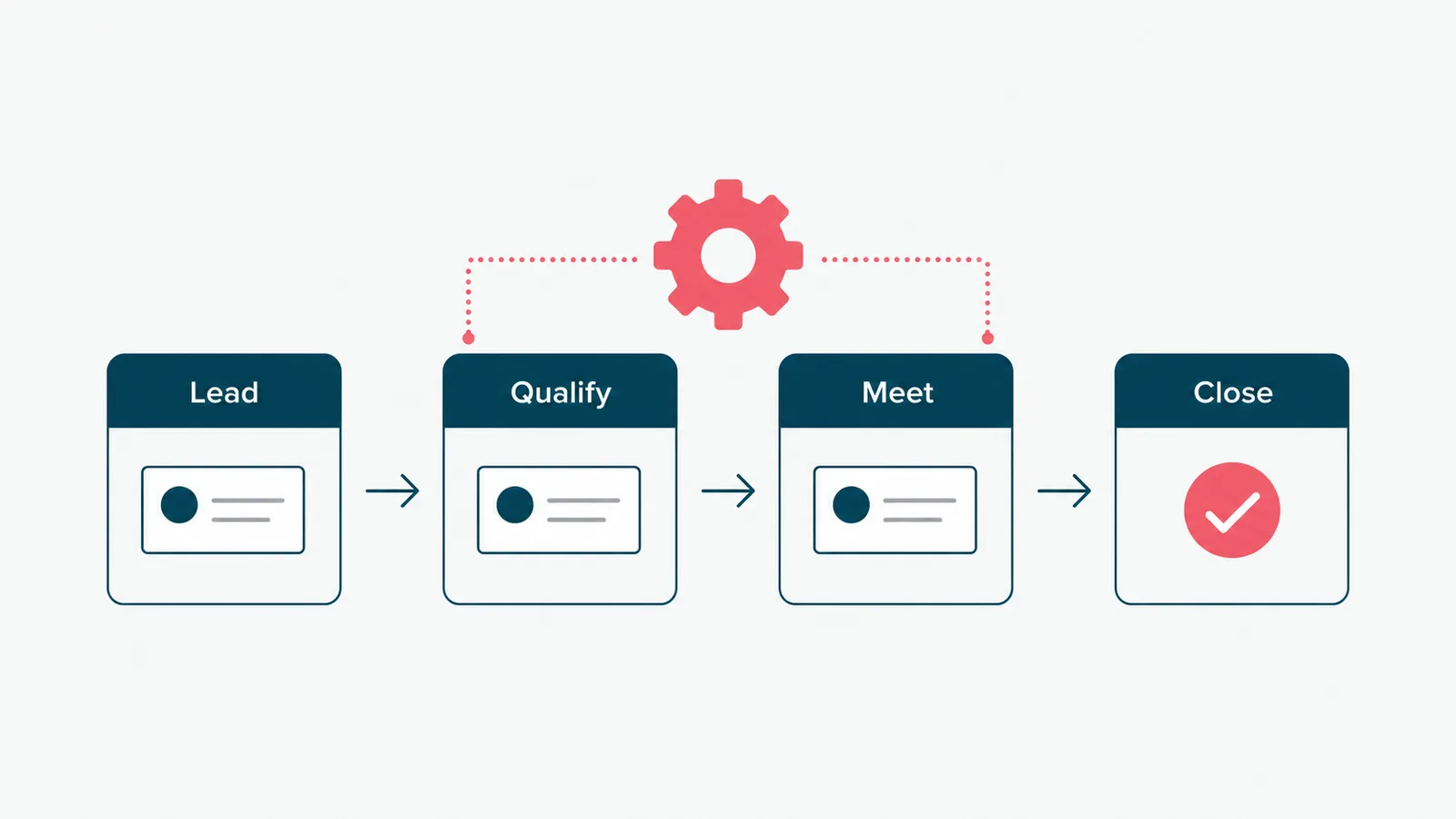
Your reps were hired to sell. Then someone handed them a CRM, a sequencing tool, a data provider, and a spreadsheet, and now they spend half the week feeding software instead of talking to buyers. Sales automation is how you give that half-week back.
Here is the honest framing. Automation does not close deals. People close deals. What automation does is remove the work around the deal, the list-building, the follow-up nobody sent, the notes nobody logged, so the people have more hours for the part only they can do. Get that straight and sales automation is one of the highest-return investments a revenue team can make. Get it backwards, expecting the robot to sell, and you have bought an expensive way to send worse emails faster. The tools are not magic. They are a multiplier, and a multiplier makes a good motion bigger and a bad one only louder.
This guide covers what sales automation actually covers, how to build it, how the main tool categories compare, and what results are realistic.
What sales automation covers
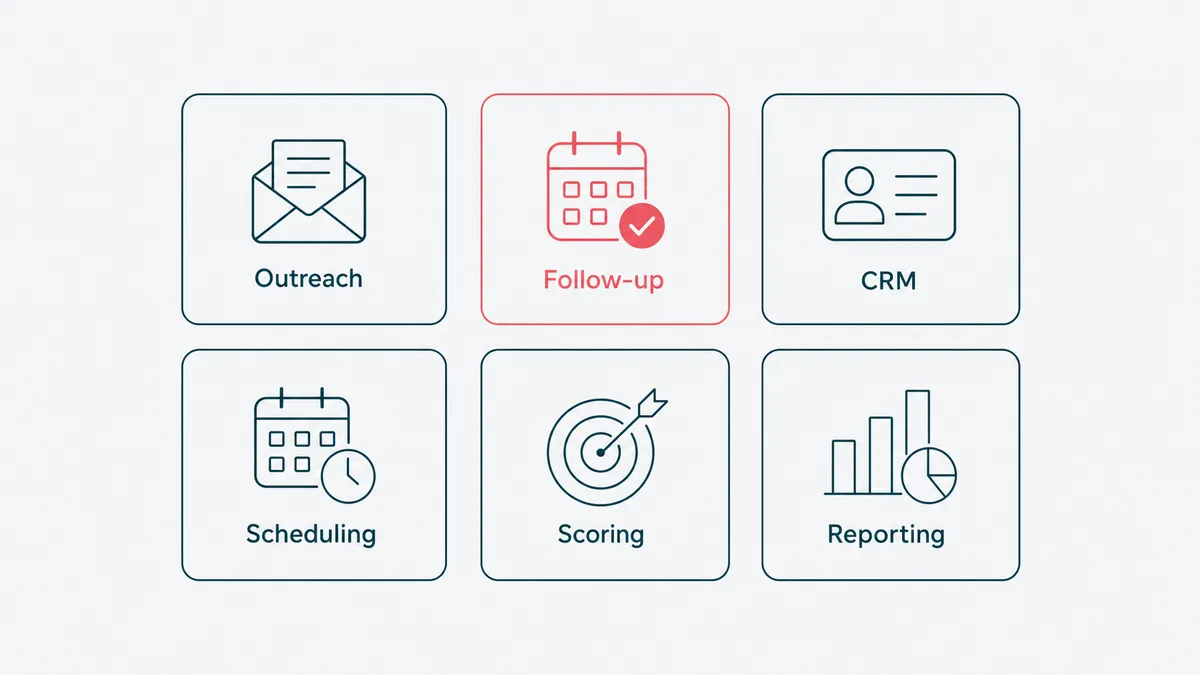
"Sales automation" is a bucket. Inside it are five distinct jobs, and most teams need a few of them, not all.
Prospecting and list-building. Finding accounts and contacts that fit your ICP and pulling them in with current data, instead of a rep copy-pasting from a directory at 7pm. The quality of this step sets the ceiling on everything after it, because the best sequence in the world sent to the wrong list is just polished noise.
Outreach and follow-up sequences. Multi-step, multi-channel cadences across email and LinkedIn that send, wait, and follow up on their own, with personalization that does not read like a mail-merge. Follow-up is where most pipeline is won or lost, and it is the first thing a busy human drops. A buyer who needed three touches and got one is not a lost lead, just an unfinished one, and finishing it is exactly the kind of disciplined, boring work software never gets bored of.
CRM data entry and enrichment. Logging activity, updating fields, and enriching records automatically, so the CRM is current without a rep typing into it. This is sales process automation at its least glamorous and most valuable, because a CRM nobody updates is just an expensive guess.
Lead routing and assignment. Getting an inbound lead to the right rep instantly, based on territory, value, or round-robin. Speed-to-lead is a real edge, and a lead that sits in a queue overnight is often a lead that already replied to a competitor.
Reporting and forecasting. Pulling pipeline and activity data into dashboards and forecasts automatically, instead of a manager rebuilding a spreadsheet every Monday morning (a fate nobody deserves). Sales process automation is really these five jobs working together, so a reply on LinkedIn updates the CRM, which updates the forecast, without a human in the loop carrying data between them.
Most teams do not need all five at once. The point is to find the one or two stealing the most selling time and start there, not to buy a platform that does everything and use a tenth of it.
How HighCraft automates your sales
We build sales automation as a system, not a pile of disconnected tools that each own a slice of your data.
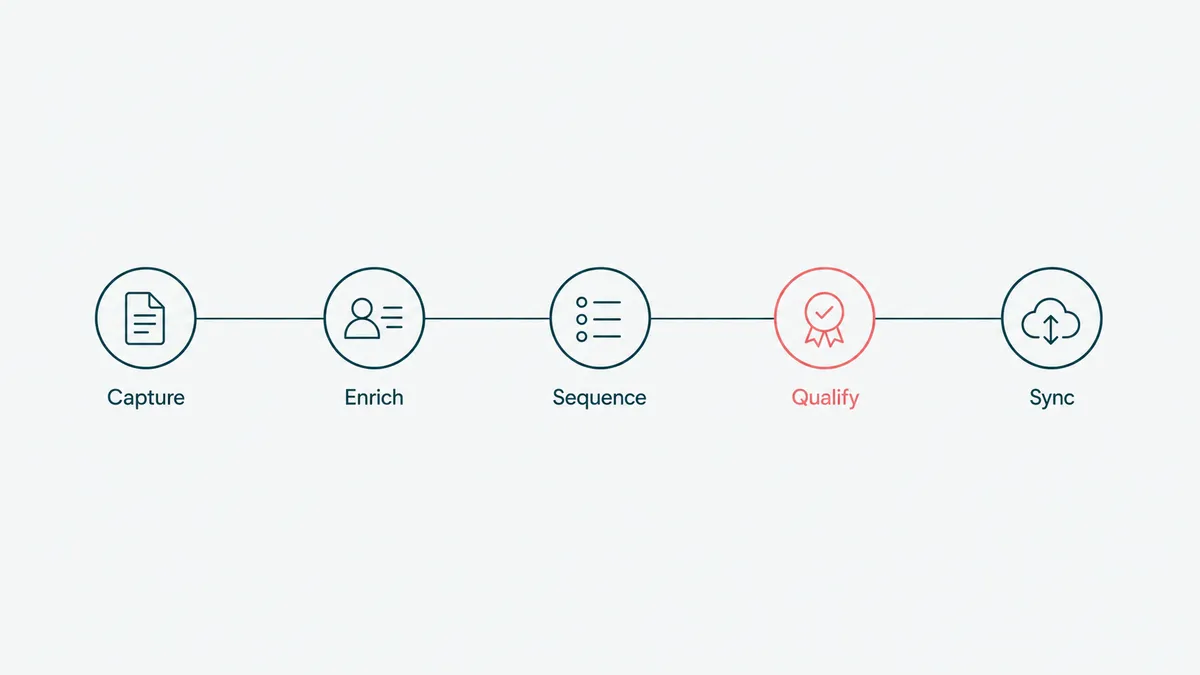
The shape is consistent. We assess your current motion to find where reps lose the most non-selling time, because that is where automation pays back, not where the demo looks best. We build the workflows and AI agents that handle the repetitive steps, prospecting, sequencing, reply handling, logging. We integrate everything with your CRM over its API, so the system of record stays the record and nothing lives in a tool nobody else can see. Then we optimize against real outcomes: meetings booked and pipeline created, not emails sent.
The judgment calls matter. Some steps should be deterministic rules, fast, predictable, cheap. Others, reading a reply, deciding the next touch, drafting a personalized opener, need a model with a human checking the high-stakes output. Knowing which is which is the difference between automation your reps trust and automation they quietly turn off. It is the same AI agent development discipline we apply everywhere: the model handles judgment, a rule handles the rest, and a person approves anything expensive.
The other thing we build for is ownership. When we build the workflows and agents, they are yours, sitting in your stack, working off your data, not locked inside a tool you rent by the seat and lose the day you cancel. That matters more as a team grows, because a pipeline assembled from four subscriptions that each own a slice of your customer data is fragile in a specific way: any one vendor can change pricing, get acquired, or sunset a feature, and your motion breaks. A system you own bends to your process instead of the other way round.
Best sales automation tools compared
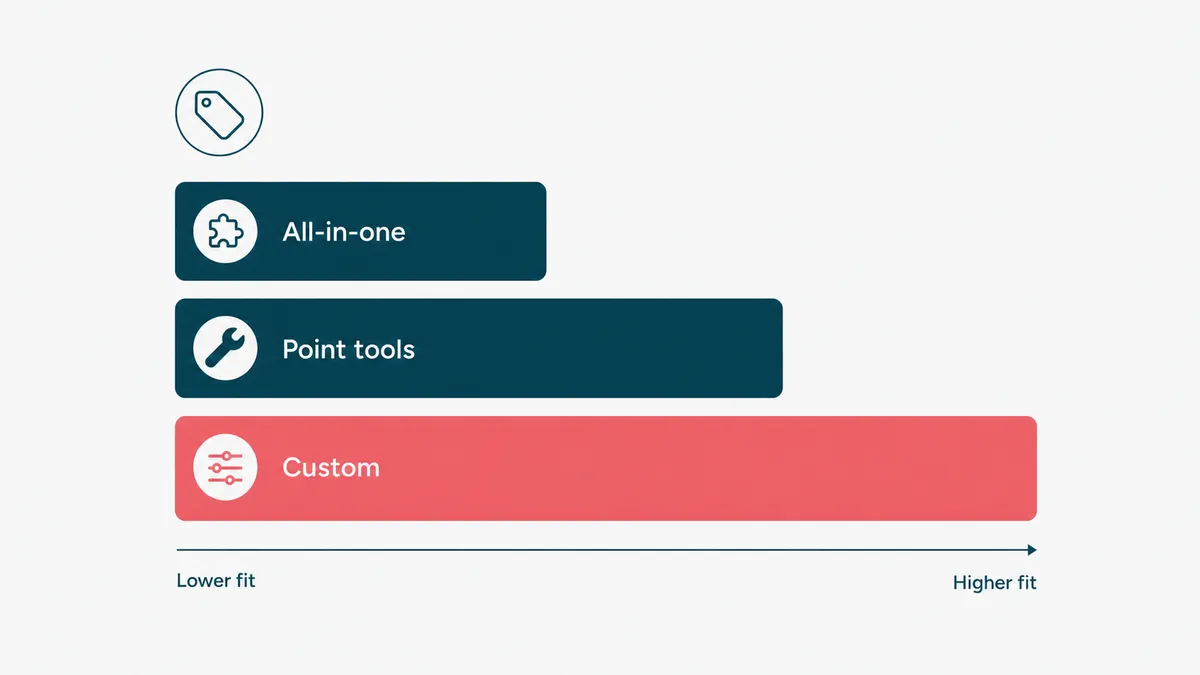
There is no single best sales automation tool, only the right category for the job. Page-one roundups list dozens of products, but they collapse into four buckets. Here is the honest comparison.
| Category | Best for | Integration depth | Do you own it? | Typical cost model |
|---|---|---|---|---|
| CRM-native automation (HubSpot, Salesforce) | Teams that want automation inside the CRM they already run | Deep within the CRM, shallow outside it | No, you rent the platform | Per-seat subscription |
| Sequencing and cadence tools (Outreach, Salesloft, Apollo) | Outbound teams running high-volume email and call cadences | Strong for outreach, syncs back to the CRM | No | Per-seat subscription |
| AI SDR and agent tools | Automating prospecting and first-touch outreach with AI | Varies, often shallow and brittle | No | Subscription, often per-lead or per-seat |
| Custom build (what HighCraft does) | A motion the off-the-shelf tools cannot fit, or a pipeline you want to own | As deep as your stack needs | Yes, the workflows and agents are yours | Project or retainer, no per-seat tax |
How to choose. Start with what is already true. If you run HubSpot or Salesforce and your needs are standard, turn on the native automation first, it is included and we will tell you so before quoting anything. If you are an outbound shop, a sequencing tool earns its seat cost. Reach for a custom build when the off-the-shelf tools cannot model your motion, when you are stitching three of them together and paying three subscriptions to do it, or when you want the pipeline to be an asset you own rather than a tool you rent. Most teams end up with a mix, and the real skill is integration, making the pieces share one clean view of the customer instead of four conflicting ones. That connective tissue is custom API development work, and it is usually what decides whether the stack helps or fights you.
One more honest note on the AI SDR category, because it is having a moment. The pitch is seductive: an agent that prospects, writes, and books while you sleep. The good ones genuinely help. The weak ones generate confident, generic outreach at a volume that burns your domain and your brand together, which is a fast way to make automation the reason your reply rate fell. Treat that category like any other agent: grounded in real context, held to a quality bar a human sets, and pointed at a list that actually fits. The technology is not the risk. Shipping it unsupervised is.
Where to start, and the mistakes to avoid
Sequencing matters. Automate in the wrong order and you scale a mess.
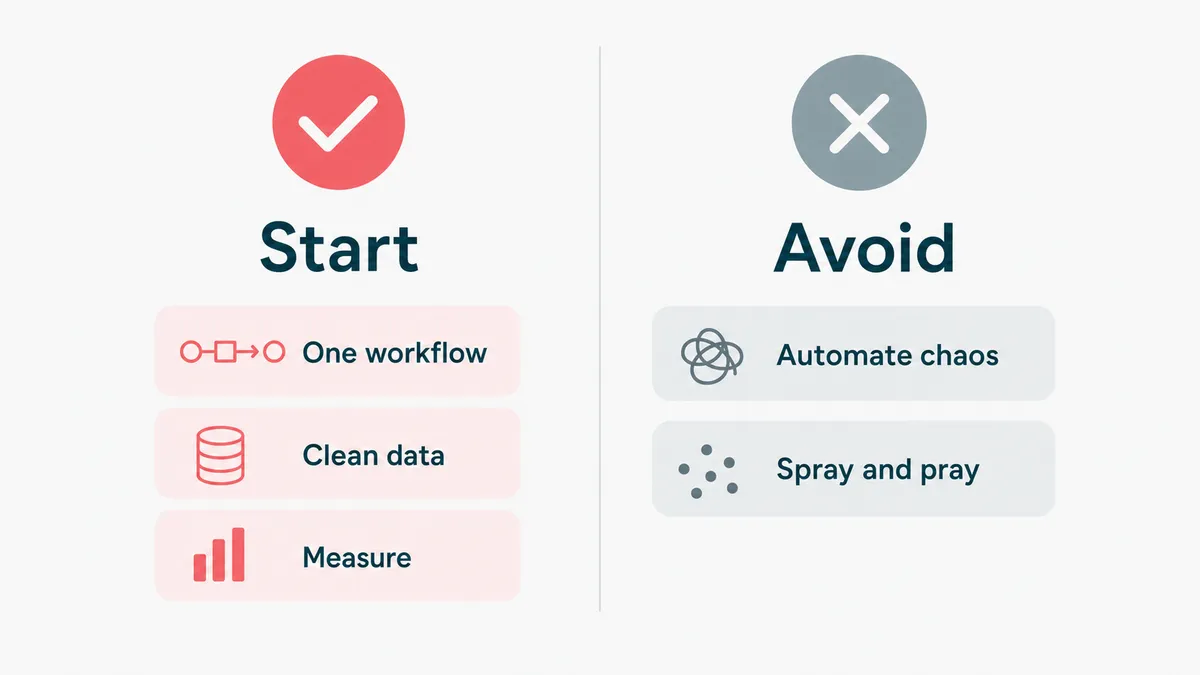
Start with CRM logging and data hygiene. If the system of record is wrong, everything built on top of it is wrong too, faster. Automatic activity capture and enrichment is the unglamorous first step that makes the rest trustworthy. Then add follow-up sequences, because consistent follow-up is the cheapest pipeline most teams are leaving on the table. Then lead routing, so inbound interest reaches a rep while it is still warm. Prospecting and AI outreach come last, once the pitch is proven and the CRM underneath it is clean. Crawl, walk, run, in that order.
The mistakes are predictable, which is the good news, because predictable is avoidable. Automating before product-market fit just scales a message that does not land, so nail it with humans first. Over-tokenized personalization, the "Hi {FirstName}, I see you work at {Company}" that screams robot, gets worse replies than a plain human note, so personalize from real context or not at all. Ignoring deliverability, sending more than your domain reputation can carry, quietly lands you in spam folders you will never see, which is the worst kind of broken because the dashboard still looks busy. And buying a platform for features you will not use is a tax dressed up as an investment. The teams that win automate one thing well, measure it, and only then add the next.
What results to expect from sales automation
Be honest about what changes and what does not.
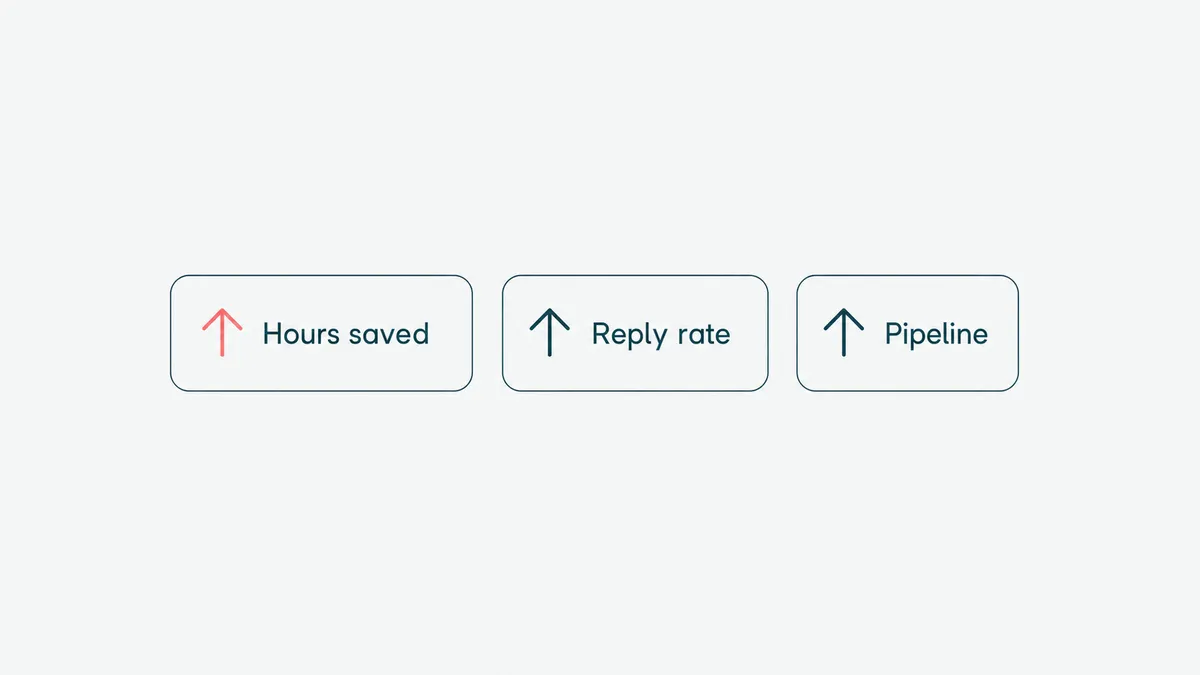
Reps get hours back. The most reliable result. Time that went to list-building, manual follow-up, and CRM updates goes back to selling. This is the win you can count on, because it does not depend on the market, only on removing work.
Faster, more consistent follow-up. Automated sequences do not forget the fifth touch or take a long weekend. Speed-to-lead improves, and the leads that used to fall through the cracks get worked. Consistency is quietly where a lot of the lift comes from.
Cleaner pipeline data. When logging is automatic, the CRM reflects reality, which makes forecasting less of a creative-writing exercise. Decisions made on real data tend to be better decisions. It also makes every other tool downstream more useful, because a dashboard, a forecast, and a scoring model are only as honest as the data feeding them, and manual logging is where that data quietly goes to rot.
A caution worth more than any benefit. Automation amplifies your sales motion, in both directions. If the message works, automation gets it in front of more of the right people. If the message does not work, automation just helps it fail at scale, faster, while burning the domain reputation your future email depends on. Nail the pitch with humans first. Automate it second. The bottleneck for most teams is not volume, it is that reps spend most of the week not selling, and that is the specific thing worth fixing.
Track the numbers that prove it, not the vanity ones. Selling time per rep per week is the real target, the hours given back. Speed-to-lead, how fast an inbound gets a first touch. Follow-up completion, the share of sequences that actually run to the end instead of dying at step two. Meetings booked and pipeline created, the outcomes that pay for the project. Emails sent and tasks automated are activity, not results, and a team optimizing for activity is usually automating its way to a worse number with a busier dashboard. Set the baseline first, then automate, then compare.
We have built the integration-heavy, correctness-sensitive systems this kind of automation depends on, and we are a senior team, Top Rated with a 100 percent Job Success Score on Upwork, led by a founder with eleven years in engineering. You work with the engineers who build it. If you want the engine that finds and qualifies the accounts in the first place, that is our AI lead generation work, and sales automation is what works the pipeline once it is full.
Tell us where your reps lose the most time, and we will scope the automation that hands it back. The goal is not a busier dashboard. It is less time feeding the CRM and more time closing, and a Monday-morning forecast that no longer requires a human to rebuild it by hand. That spreadsheet has earned its retirement.